For game devs, the past 2.5 years of layoffs make it seem like gaming is falling apart. But that’s not how the brands see it.
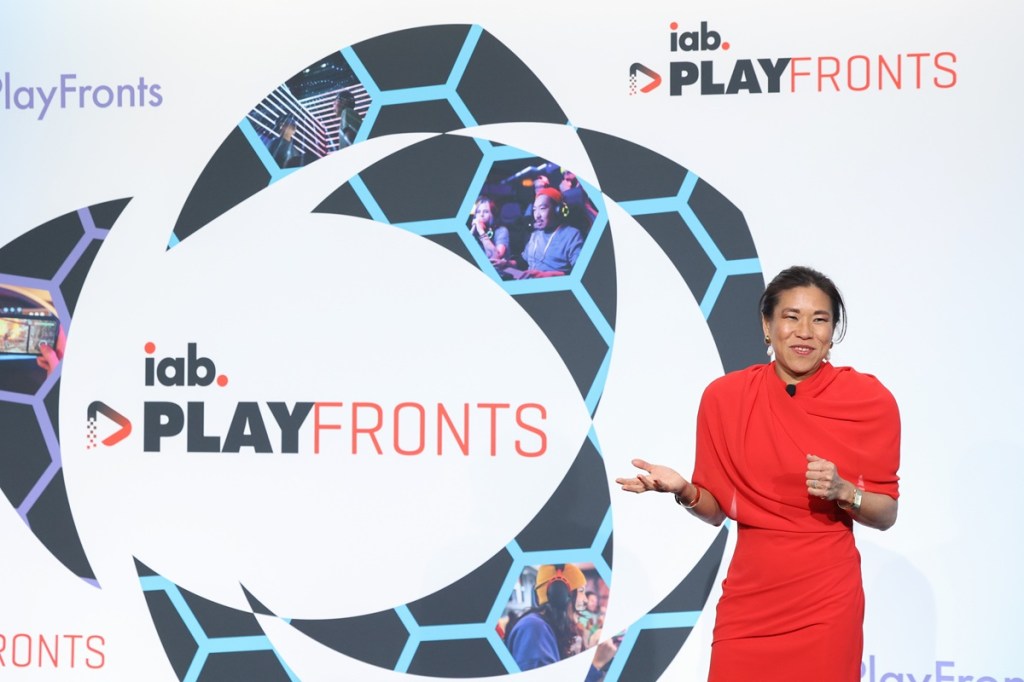
That was the vibe at last week’s Internet Advertising Bureau (IAB) Playfronts, said Zoe Soon, vice president of the IAB Experiences Center, in an interview with GamesBeat.
In a talk at IAB Playfronts, Soon said that brands are enthusiastic about moving into games, and the opportunity is huge, as IAB believes that games are getting just 5% of the total digital advertising spending. That’s down from 6% of spend in 2022, but Soon said things are turning around.
That should cure some of the gloom in gaming. Game devs have seen 35,000 layoffs in the past 2.5 years, according to Amir Satvat, the game job champion. Part of the reason was overhiring during the pandemic, but Powerpoint gaming champion Matthew Ball pointed to troubling trends where there is more competition for gaming time and players are stuck playing old games for a longer period, resulting in less time to embrace new games. Satvat believes the hiring is only now starting to exceed firing in gaming.
I think this means there are lots of reasons for both pessimism and optimism. So it’s interesting to see pessimism inside the world of gaming and optimism when looking from the outside in.
“Gaming is nearly ubiquitous among younger generations, with 90 to 95% of Gen Z and Gen Alpha identifying as a gamer. But it’s not just young people. Everyone’s a gamer ,” said Zoe Soon, vice president of the IAB Experiences Center, in a talk at IAB Playfronts. “The average age of a gamer is 37. I think we’re actually calling that an elder millennial now, which is kind of depressing. Call us what you want. We make up the majority of household spenders in America.”
There are 190 million players in the U.S., according to the Entertainment Software Association, and there are around 3.4 billion worldwide, according to Newzoo.
Soon added, “Gaming is a great way to reach engaged audiences at scale. The preview of Grand Theft Auto VI racked up an incredible 93 million views in just 24 hours after being released. It’s hard to conceptualize a number that big. The affinity gamers feel for gaining titles is unmatched.”
The U.S. in-game ad revenue is expected to hit $11.5 billion by 2028, eMarketer said. The gaming creator economy is expected to hit $230 billion by 2034, Market.us said. The brands recognize that gaming has become the biggest entertainment industry of all.
“What will set brands apart is their ability to connect with audiences in authentic ways through storytelling, which is central to gaming,” Soon said. “We need to stop thinking about marketing in old terms like region frequency, and look deeper as an industry. I would argue that we’ve over-indexed on right time, right person, and under-indexed on right message.”
“So it is imperative that brands find a way to connect more deeply with consumers through storytelling. Games are a great way to do this because they can transform the advertising experience into a narrative experience where brands need part of a story rather than interrupt it,” Soon added.
The creator economy

She noted the rise of the creator economy.
“Creators have taken the advertising world by storm and it sets and the creator economy is set to be worth half a trillion dollars by 2027 creators play a big role in marketing and creating, community building in gaming. Watching streamers play games is a huge pastime,” Soon said.
“Last year, consumers watched an incredible 32.5 billion hours of gaming content across streaming platforms and brands have a higher likelihood of successfully resonating with audiences when they work with streamers because the gaming community is very intolerant of inauthenticity,” she said. “So streamers are careful not to appear transactional when working with brands. But even if you put aside everything that’s happening with the creator economy and AI, brands can’t afford to ignore gaming because it drives real business outcomes.”
That fear of being inauthentic might be holding some brands back.
Soon said, “I think the real reason that gaming is at less than 5% of digital ad spend is because we dislike change. It’s human nature, we resist trying something new that deviates too much from what we’ve always done and what we’ve always known. “
She noted the journey of the characters in the film Wicked, and said she was reminded of gaming’s journey in the world of advertising.
“If we shoehorn gaming into the outdated models inspired by linear television, we reduce it to something it was never meant to be, and we miss what it truly has to offer,” Soon said. “If you’re sitting here, you’re likely already a champion of gaming, or at the very least open to hearing about what it can do for your brand, but maybe you’re feeling discouraged at the 5% but we should feel fired up because this is our chance to lead. And what does it mean to be a leader? It means we go first, because we can see things that others can’t yet.”
Soon believes others have sold gaming short.
“When people say gaming is less than 5% of digital ad spend, I think I know something that so many other people can’t yet see. So let’s start the revolution here together today.”
The 5% number is sizable, but it’s been hard to move the needle upward with such a large industry. It takes a while for change to register. But Soon said more brands are leaning into gaming.
It takes unique storytelling within ads to get the attention of gamers. Consider the ad that EA created to boost Battlefield. It mimicked something another player really did in a game, where the player was in a jet that was being chased by another player in a jet. The player being chased bailed out of the plane, turned around and fired a bazooka at the chasing plane. It blew up the chase plane, and then the player dove back toward his own falling plane. The player got into the plane again and took off flying. It was such a unique feat that it went viral in a video, and gamers loved it. EA reproduced that scene in its own ad (some gamers weren’t happy about that). That was the kind of storytelling in ads that works for gamers.
“There’s a number of ways I feel like gaming lends itself to storytelling just because you’re not watching something passively,” Soon said. “Someone says in the chat, I’m hungry. And then you can put an ad in there or one of the cars driving in Rocket League cracks a windshield and then the player gets an ad for a windshield. There’s so, so many contextual cues and data points to integrate into a story.”
These ads don’t necessarily seem like ads, but they are authentic for the gamers.
“I think there is a conception that gamers are ad resistant, but I think it’s just that you have to understand the community going in,” Soon said. “You can’t do these one-offs that then leave. You have an understanding and the dialogue in the community. And also respect gameplay. They participate in rewarded ads because people understand the value exchange. And if the ad is playing off the storyline or understands the culture it’s going into, that also helps as well.”
A return to optimism?

While brands have this newfound optimism around games as a way to reach the young generations, game developers have been shellshocked by the last couple of years. For 2.5 years, there were deep layoffs and a lack of funding for games, and that has only begun to slow down and be replaced by hiring. So the game developers are not as optimistic about growth waves coming in the same way brands are happy.
“We saw when COVID hit, a lot of industries took a hit, except gaming got a boost,” Soon said. “Because everyone stayed at home and gaming grew. Then we saw a correction. Game companies hired a bunch and then COVID ended and people went on to do other things. The growth slowed and evened out. Now we are seeing the readjustment for that period.”
And now that this cycle has passed, Soon hopes that brands will drive a new period of growth in games. Brands are asking to be placed in games programmatically, and that’s an indicator of the growth, she said.
“These big announcements of partnerships, like the Google one and the Roblox one here, are really important to me. I also think that the creator economy, the rise of the creator economy, which obviously has been around for a while, has really gotten noticed in the advertising world,” Soon said. “I think that will also put the wind in the sails of gaming because streamers are such a part of the gaming culture.”
She noted there is a lot of strong community that forms around intellectual property. The brands will help make the bridge into gaming with this IP, whether the integrations happen with things like cosplaying or other factors.
“They’ll see it as the way that the creative space is happening,” Soon said.
Perhaps, however, gaming is capturing a small part of ad budgets now because it’s hard to come up with the clever ads that will catch the attention of gamers.
“I think that’s right. I feel like mobile gaming is built for ads because it’s the free-to-play model and people understand that they’re getting free things in the free-to-play game because it’s supported by ads,” Soon said. “They’re also used to seeing ads in mobile gaming. In those worlds, the ad is the experience. So it’s integrated in a right way, and there is a way to do that on those hardcore console games as well.”
She added, “Obviously can’t slap CTV ad solutions with other other channel ad solutions in there and expect it to not be jarring. They’re finding ways to do that. Is there a reward at the level between levels where they can make an ask? Xbox does that on the home screen. There are digital skins and avatars.”
Do brands still have to be convinced they need to go into games?
“It’s hard to know that. Sometimes gaming may get reported as part of the mobile number or the social number, and so it’s like maybe we’re not seeing the full number. But I think change takes a while to actually take effect. The fact that 90% to 95% of Gen Z and Gen Alpha identify as gamers, and that gaming is a new social for them, that’s one factor. The other factor is Millennials grew up gaming and now make up the majority of household spenders in America.”
She added, “So the gamer stereotype is sort of crumbling a little bit with a generation that understands gaming. And then we’re also seeing that gaming is a great way to reach older generations and women like Zynga has mentioned. So we are making headway.”
IAB is doing its part to make the process easier for brands in working with games. That means apples to apples measurement, transparency and brand safety concerns — all helped by third-party vendors, she said.
I noted the game industry is so beaten down by the layoffs that they can’t see the other side of the slump. There’s trouble in things like the decline of time spent playing games and the lack of free time for gamers to try new games.
“That’s why it’s important for us to be able to scale across titles and issues, and the programmatic processes being able to deploy at scale. So I think that will be really what we need,” Soon said. “I feel like game developers are looking to diversify their revenue streams because it’s becoming harder and harder to sell subscriptions. Everyone’s competing for the same budget, like consumer budget and time. And it’s like they’re paying for streaming subscriptions. How many games can they play at once? It’s an interesting time.”
As for any other topics, Soon said, “The only thing I’ll say is, with the rise of AI, the creator economy, and so much of Gen Z and Gen Alpha playing games, we have to crack it at some point. It’s just a matter of when.”